March 27, 2026
Where shredder performance really begins: How Attar Metals reduced wear and cut maintenance costs upstream
Running a shredder in 2026 means managing risk as much as throughput. Attar Metals Inc., a full-service recycler based in Mississauga, Ontario, learned this first-hand. In April 2023, the company integrated Zato's Blue Devil twin-shaft pre-shredder upstream of its shredding line. The outcome was clear: a 30% reduction in shredder maintenance costs, fewer unplanned stoppages, more predictable service intervals, and a measurable improvement in plant safety. A concrete case that shows how conditioning material before it reaches the rotor is the most effective strategy for protecting equipment and people alike.
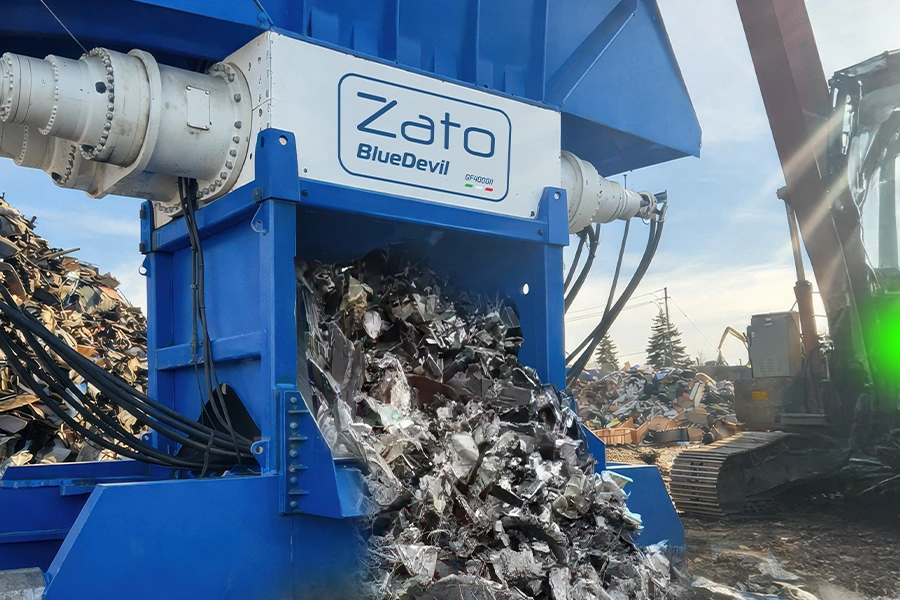
When the shredder becomes the bottleneck
Attar Metals Inc. processes a mix of ferrous and non-ferrous scrap from industrial suppliers, dealers, and public drop-off.
Before 2023, raw material was fed directly into the shredder line — and the wear reflected it. "There was a lot of wear and tear on that machine," says Tony D'Alonzo, maintenance manager at Attar Metals, with four decades of experience in heavy equipment operations.
Beyond maintenance hours, it was a strain across the entire system. And above all, there was a safety concern. "Oh, number one is explosions," D'Alonzo says. High-speed rotors introduce friction and sparks. If the material contains residual fuels or pressurised components, consequences can escalate quickly. Something upstream had to change.
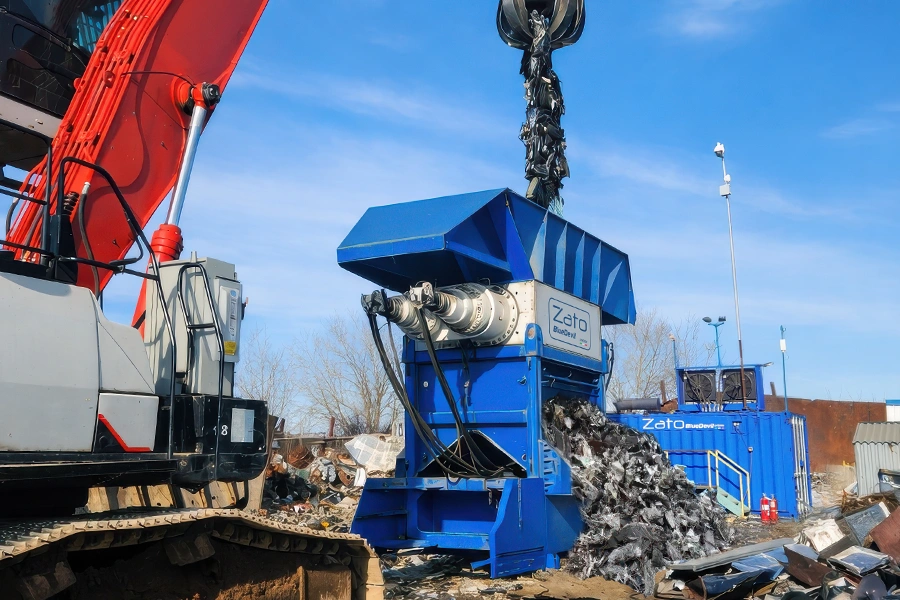 The Blue Devil pre-shredder: controlled force before the rotor
In 2023, Attar added Zato's Blue Devil, a low-speed twin-shaft pre-shredder, positioned upstream of the hammermill. Using counter-rotating shafts and high torque rather than speed, it shears and opens incoming scrap gradually — reducing bulk density, breaking down oversized pieces, and delivering a more homogeneous feed into the primary shredder. This directly increases hourly throughput while limiting friction and spark generation.
"It was an expansion to help our other machine out," D'Alonzo says.
Measurable results: 30% reduction in shredder maintenance costs
The impact was clear. Reduced impact loads meant lower wear on hammers and liners, fewer conveyor jams, and less strain on engines. D'Alonzo estimates a 30% reduction in shredder maintenance costs. "When you're talking millions of dollars to run a shredder, 30 percent is a good chunk." Service intervals became more predictable, and the risk of high-energy events inside the mill dropped significantly.
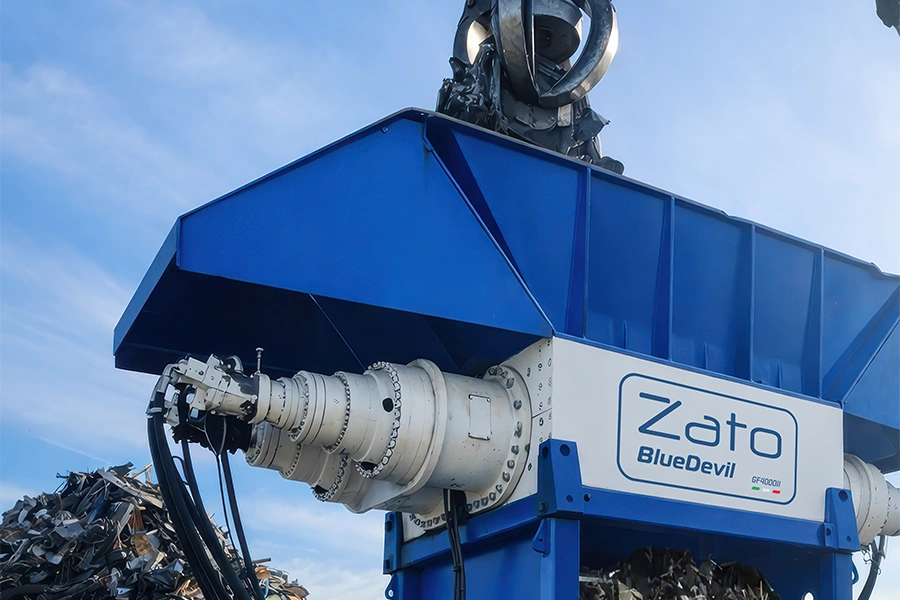
Safety, capability, support: the three criteria that matter
Choosing the Blue Devil wasn't just about specs. Attar visited Belson Scrap Metal in Chicago to see the machine running in a live environment before committing. "That gave us confidence," D'Alonzo says. For any operator evaluating upstream pre-processing, he points to three priorities:
- Safety first: by handling oversized and hazardous materials under controlled, low-speed conditions, the Blue Devil intercepts these risks before they reach the high-speed rotor — protecting both equipment and the people working around it.
- What the machine can do for your line: capability, material compatibility, and impact on hourly throughput.
- Supplier support: "These machines are very smart now. You need support behind them."
In a market where uptime defines profitability, conditioning scrap before it reaches the rotor has become a strategy — not just a processing choice.