December 1, 2025
Low-speed twin-shaft shredding: The new standard in safe and controlled scrap preparation
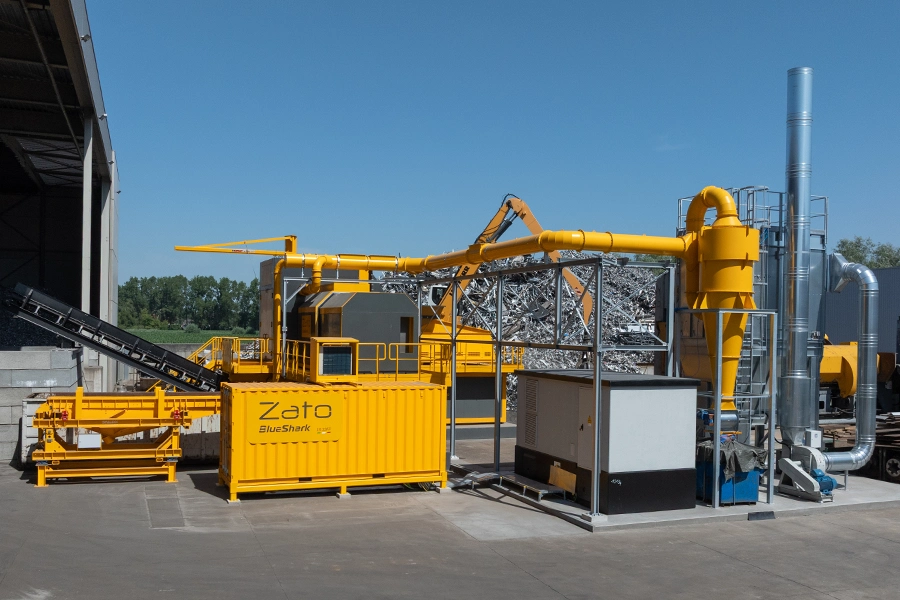
In modern scrap processing, material preparation has become the foundation of plant safety, process efficiency and predictable operating costs.
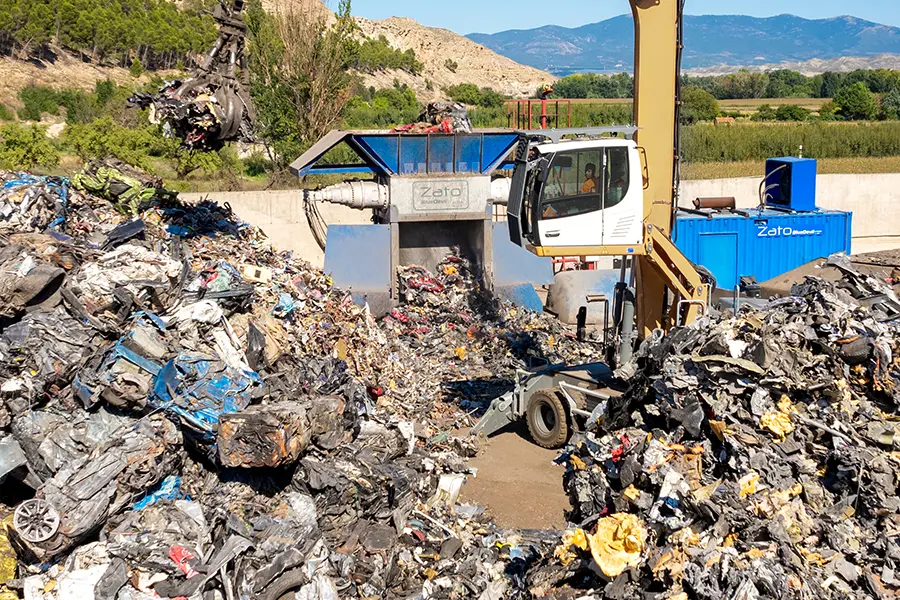
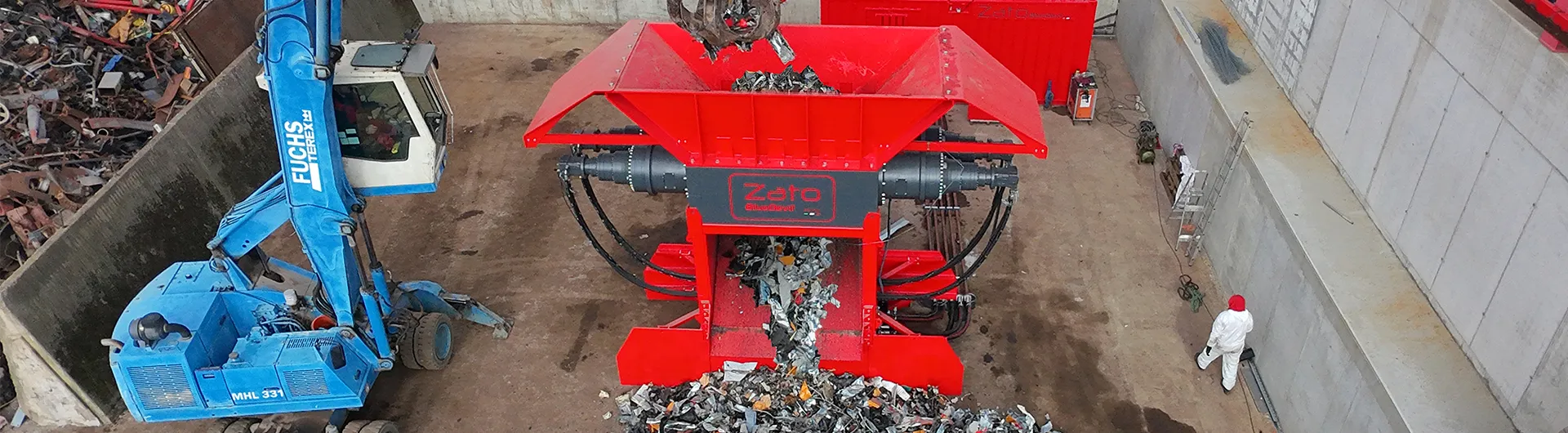
Zato’s real low-speed twin-shaft shredders, operating at just 3–6 rpm, replace high-impact breaking with a controlled cutting action. This reduces wear on the shredder itself, increasing its service life, and produces a more homogeneous material flow that improves the efficiency and safety of downstream processes.
Discover three defining strengths of this technology!
1. Low-speed twin-shaft shredding cuts, controls & protects
True low-speed shredding means the machine cuts instead of tearing, avoiding violent impacts, uncontrolled projections and vibration spikes.
This stabilises the entire line and prevents dangerous items from reaching the hammer mill.
Watch the technology in action on YouTube!
Watch the technology in action on YouTube!
2. Zero-gap cutting geometry: Precision that becomes safety
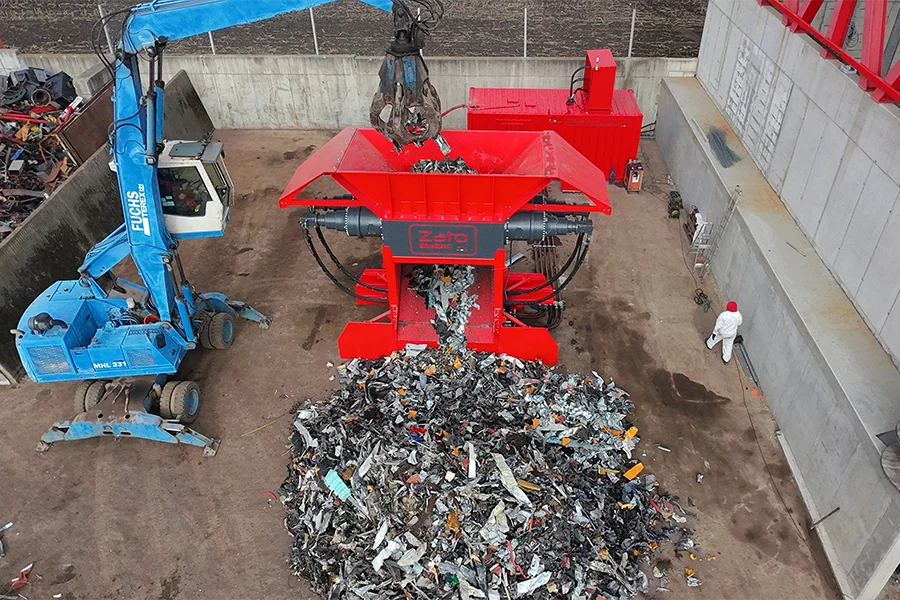
Zato’s zero-gap blade configuration ensures a clean, uniform cut that intercepts hazardous or non-shreddable items—such as cylinders, sealed containers and batteries—before they can reach the hammer mill.
This precision greatly reduces risk, improves workplace safety and prevents costly unplanned stoppages.
3. Real efficiency: Low wear, predictable costs — and higher scrap value
Because the pre-shredder cuts rather than tears, the entire shredding line operates with significantly less stress. This translates into lower wear, predictable maintenance and fewer interruptions.
Wear-part costs typically average around €5 per tonne, due to the precise cutting action and the absence of impact peaks.
Pre-shredding also improves the commercial value of the material. A cleaner, denser and more uniform product often receives higher prices from mills, even when the incoming material remains the same.